Dermatology • Rosacea • Vascular concerns
Rosacea and facial redness
Rosacea is a chronic inflammatory skin condition that mainly affects the central part of the face. Typical signs are recurring or persistent redness, small visible blood vessels and, in some patients, inflammatory bumps. It cannot be cured completely, but treatment and the right skin care help relieve the symptoms and keep them under control in the long term. At the Esthetic clinic in Bratislava, rosacea is treated by a dermatologist. The initial examination costs €80, and redness and visible vessels can be treated with IPL pulsed light, BBL technology or a laser as needed. You can book directly, without a referral.
| What it is | a chronic inflammatory skin condition of the face |
| Typical signs | redness, visible vessels, bumps, sensitive and burning skin |
| Where it appears | cheeks, nose, forehead, chin, sometimes the eyes |
| Is it contagious? | no |
| Treatment | medication from a dermatologist, IPL and BBL light, laser for vessels, gentle skin care |
| Price | initial dermatology examination €80, IPL face €100, BBL €390 |
Symptoms of rosacea
Rosacea usually starts with flushing episodes that fade after a while. Over time, the redness may become persistent. Symptoms differ from person to person, and periods of flare-ups and calm can alternate.
- Redness and flushing. The cheeks, nose, forehead or chin suddenly turn red, for example after a hot drink, in the heat or under stress.
- Visible vessels. Small dilated blood vessels appear on the cheeks, nose and chin.
- Bumps and pustules. Acne-like spots appear on the reddened skin, but without blackheads (comedones).
- Sensitive skin. The skin burns, stings, sometimes itches, feels tight and does not tolerate cosmetics well.
- Eye problems. The eyes may be dry, burning or red, and the eyelid margins inflamed.
- Skin thickening. Rarely, the nose becomes enlarged and permanently red, and the skin on it thickens and turns bumpy (rhinophyma). This happens more often in men.
Types of rosacea
The types often overlap. During the examination, the dermatologist determines which symptoms prevail and chooses the treatment accordingly.
| Type | How it shows |
|---|---|
| With redness and vessels | persistent redness of the central face, flushing, visible vessels |
| Inflammatory | bumps and pustules on reddened skin |
| With skin thickening | thickened, bumpy skin, most often on the nose |
| Ocular | dry, burning, red eyes, inflamed eyelid margins |
Causes of rosacea and what makes it worse
Several factors contribute to the development of rosacea: a hereditary predisposition, impaired regulation of the blood vessels in the skin and an altered immune and inflammatory response of the skin. In some patients, an increased number of Demodex mites, which naturally live in the skin, also plays an important role. Their presence alone does not mean disease, but a higher number of mites and the inflammatory reaction to them can contribute to rosacea symptoms.
Symptoms are often triggered or worsened by:
- sudden changes in temperature, hot drinks and heat,
- alcohol and spicy food,
- stress,
- sun (UV radiation),
- cosmetics that irritate the skin.
Triggers differ from person to person. It helps to notice what makes the redness worse and avoid it.
How we treat rosacea
Rosacea is a long-term condition, so treatment combines medication, procedures and skin care. We adjust it to the symptoms that prevail.
- Examination by a dermatologist. Dilated vessels can be one of the signs of rosacea, but they also appear without it. That is why the dermatologist first assesses what causes the redness and rules out other skin conditions with similar symptoms.
- Medication. For the inflammatory type of rosacea, the doctor recommends topical or systemic treatment based on the findings. Topically, we use products containing metronidazole, ivermectin or azelaic acid. For moderate to severe inflammatory symptoms, the dermatologist may prescribe systemic treatment with doxycycline. Products containing brimonidine can be used to temporarily reduce persistent redness. For selected symptoms, the dermatologist may also recommend a compounded paste, but it is not a treatment suitable for every patient. The choice of treatment depends on the specific symptoms of rosacea and the individual condition of the patient.
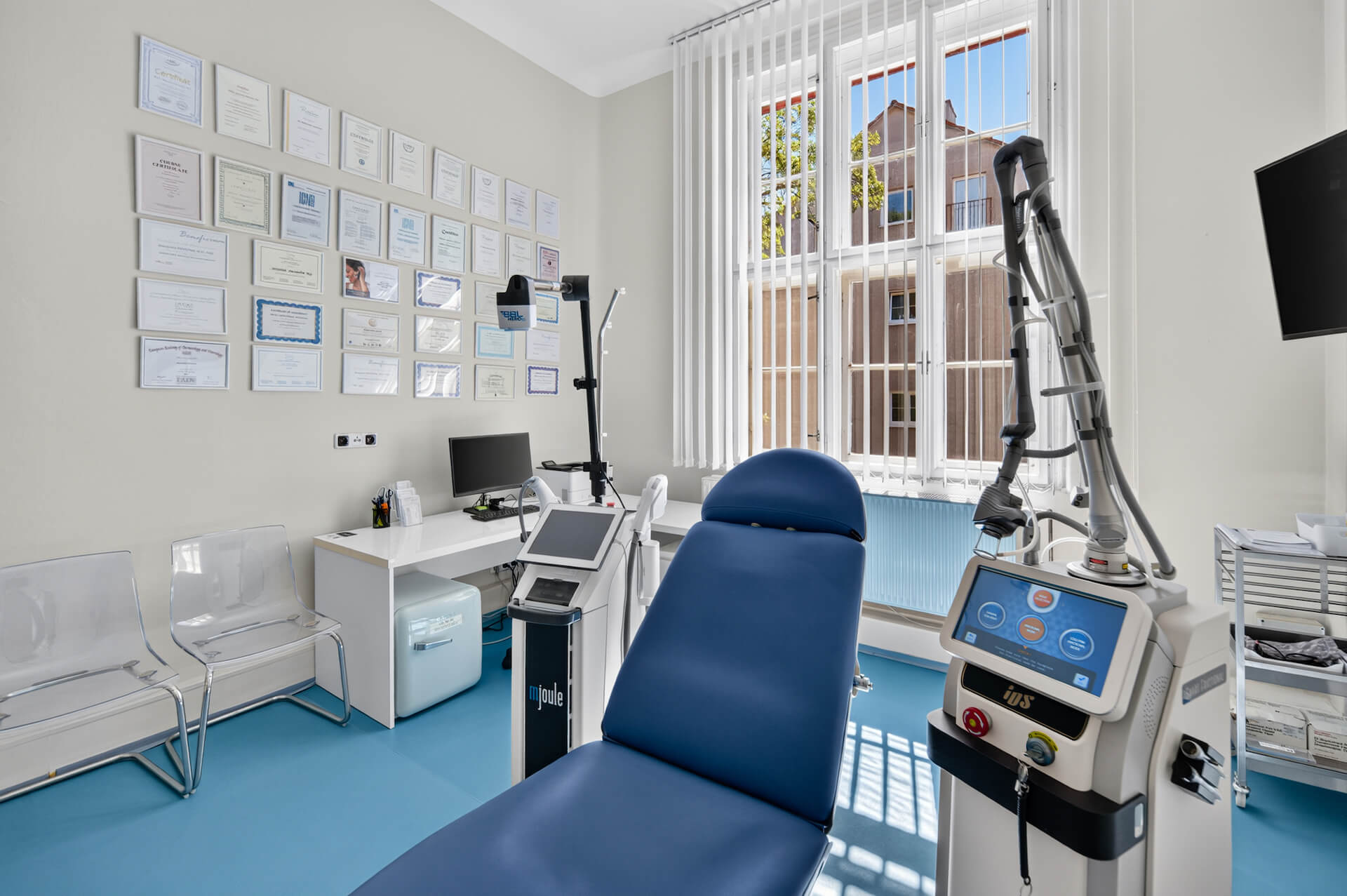
- Light and laser. For redness and visible vessels, treatment can be complemented with IPL or BBL light or a laser. IPL and BBL light is suitable for diffuse redness, small superficial vessels and rosacea with redness. We use the Clarity II laser (Nd:YAG) for individual, deeper and larger vessels. We usually recommend a series of 3 to 4 treatments 4 to 6 weeks apart. We set the exact number based on the intensity of the redness, the extent of the vascular changes and how the skin responds. Some patients may later need maintenance treatments as well. We plan the treatments mainly from fall to spring.
- Check-ups. At check-ups, we monitor how the treatment works and adjust it as needed.
Light and laser do not cure rosacea, but they reduce redness and visible vessels. A sealed vessel usually does not come back, but the treatment does not change the tendency to form new ones. Details on laser treatment of vessels, preparation and possible side effects can be found on the page Laser removal of facial vessels.
Price
| Service | Price |
|---|---|
| Initial dermatology examination (30 minutes) | €80 |
| Check-up (15 minutes) | €40 |
| IPL pulsed light, face | €100 |
| IPL pulsed light, cheeks | €70 |
| BBL, vessels and rosacea (1 area) | €390, package of 3 treatments €990 |
| Clarity II laser (Nd:YAG), facial vessels | from €90 |
| Rosacea paste (compounded), if recommended by the dermatologist | €9 |
IPL and BBL light treatments belong to the dermatovenerology outpatient clinic: at the first visit, you pay for the initial dermatology examination, and with a dermatological diagnosis, a check-up fee is also added to the treatment. A Clarity II laser session is charged together with the initial laser medicine consultation (€50) or a check-up (€30). You can find all prices in the price list.
Skin care with rosacea
Rosacea is a long-term condition, so besides treatment, UV protection, gentle care for sensitive skin and limiting triggers also help.
- Wash your face with lukewarm water and a mild cleanser, do not rub it and avoid abrasive scrubs.
- Choose cosmetics designed for sensitive skin, without alcohol and fragrance, and a gentle moisturizer.
- Use sunscreen with a high SPF every day, also in winter.
- In the cold, protect your face with a scarf; in summer, avoid direct sun and overheating.
- Try any new product on a small area first.
Rosacea and the eyes
Rosacea can also affect the eyes. It shows as dry, burning or red eyes, a feeling of a foreign body in the eye or inflamed eyelid margins. For dryness, burning and redness of the eyes or recurring inflammation of the eyelid margins, we recommend an examination by an eye doctor (ophthalmologist). If you have eye pain, marked sensitivity to light or worsening vision, an eye examination is needed without delay, because in more severe cases ocular rosacea can also affect the cornea.
When to see a dermatologist and how the doctor recognizes rosacea
- the facial redness does not go away or gets worse,
- bumps and spots appear on the reddened skin,
- the skin burns and stings and regular care does not help,
- you have eye problems.
Rosacea is easily mistaken for acne, seborrheic dermatitis or irritation from cosmetics. The dermatologist recognizes it by the appearance of the skin and by how and when the symptoms appear. The right treatment is determined only after the examination.
Who treats rosacea
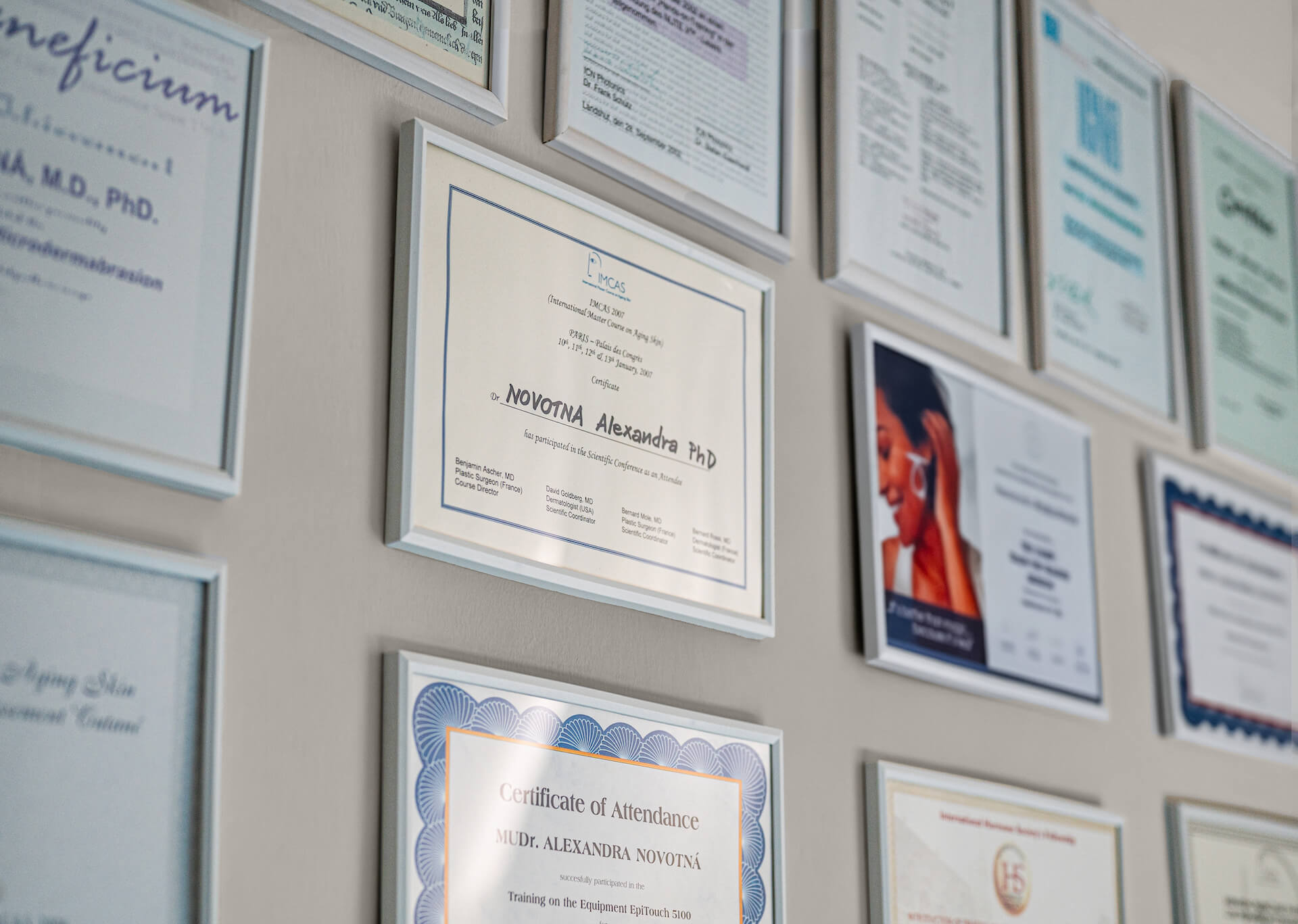
At the Esthetic clinic, rosacea is treated by a dermatologist in the dermatovenerology outpatient clinic. Laser and light treatments are performed by a doctor or a specially trained nurse under a doctor’s supervision. The medical guarantor of laser medicine at the Esthetic clinic is MUDr. Alexandra Novotná Rozborilová, PhD., a dermatovenerologist with more than 33 years of practice, more than 25 years of experience in laser medicine and president of the Slovak Laser Therapy Society. The Esthetic clinic is an accredited training center of the Slovak Medical University.
Frequently asked questions
Is rosacea contagious?
No. Rosacea is not transmitted by touch or by sharing items.
Can rosacea be cured?
It cannot be cured completely; it is a long-term condition. With treatment, gentle skin care and limiting triggers, however, it can be relieved and kept under control in the long term.
What is the difference between rosacea and acne?
Acne also produces blackheads (comedones), rosacea does not. Besides bumps, rosacea shows as redness, flushing and visible vessels. We write about acne on the page Acne.
How long does rosacea treatment take?
With topical treatment, the first improvement of inflammatory symptoms can be seen after about 2 to 4 weeks, and a more marked effect usually comes after 8 to 12 weeks of regular treatment. When redness and vessels are treated with IPL or BBL light, the result develops gradually over the series of treatments. Rosacea is a chronic condition with periods of flare-ups, so long-term skin care, limiting triggers and, if needed, maintenance treatment are also important.
Does laser help with rosacea?
IPL and BBL light or a laser reduce redness and visible vessels. Inflammatory spots are treated with medication. The dermatologist decides which method to choose during the examination.
How much does rosacea treatment cost?
The initial dermatology examination costs €80, a check-up €40. IPL treatment of the face costs €100, BBL €390 per area and laser treatment of facial vessels from €90. The total price depends on the type of rosacea and the number of treatments.
What makes rosacea worse and what should I eat?
Common triggers include sudden changes in temperature, hot drinks, alcohol, spicy food and stress. There is no single diet that helps everyone. It helps to notice what makes the redness worse.
Does health insurance cover rosacea treatment?
No. The Esthetic clinic is a private facility without contracts with health insurance companies, so you pay for the treatment yourself.
Where in Bratislava is rosacea treated?
At the Esthetic clinic at Partizánska 2 in the Old Town (2nd floor, block A). You can book without a referral using the online form or by phone at +421 905 244 577.
Related: Laser removal of facial vessels · IPL photorejuvenation · BBL HEROic · Acne · Dermatovenerology
Book an appointment
Fill in the form and our team will contact you.
Esthetic Clinic
Partizánska 2, 811 03 BratislavaOpening hours
Contact us

More than 1,000 references from Slovakia, Austria, Hungary and the Czech Republic.
Our references speak for themselves.

Book an appointment
Fill in the form and our team will contact you.