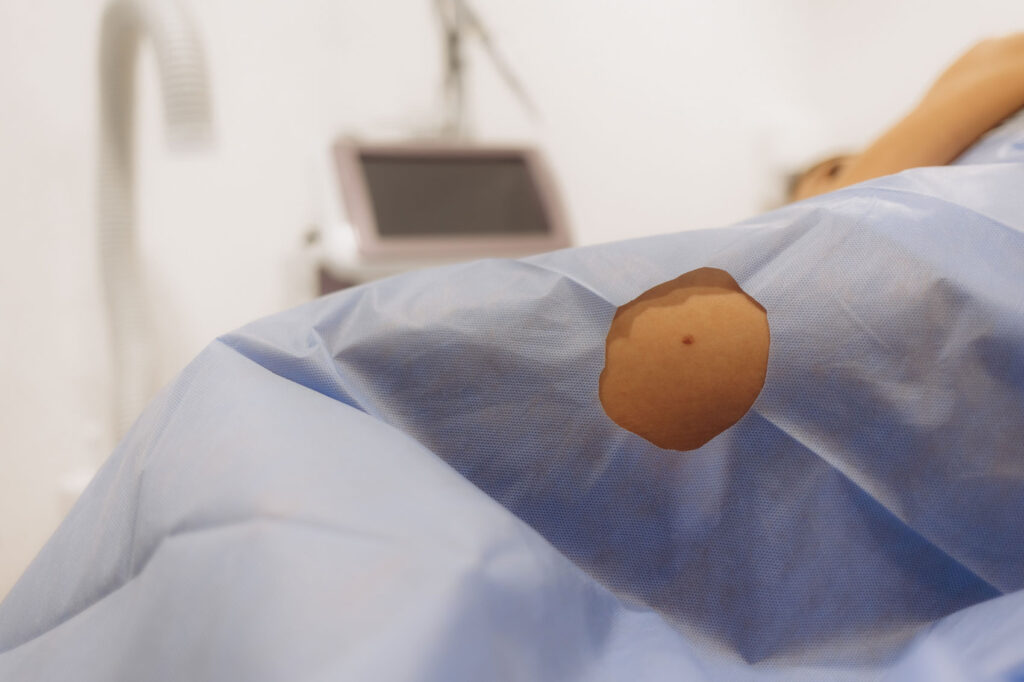
Surgical mole removal, otherwise known as surgical excision on the face or body, is a common medical procedure performed to remove skin findings such as moles, warts or other pigmented lesions. This procedure is usually performed after a dermatoscopic examination of the moles by a dermatologist, and then a plastic surgeon removes the desired skin lesions.
If you have any concerns about moles or changes to your skin, it is important to consult with our dermatologist.
The procedure for surgical removal of moles includes:
- Consultation/examination by a dermatologist: The dermatologist will assess the mole you are considering for removal with a dermatoscope. He will take into account its size, shape, colour and any changes that may have occurred. If necessary, a biopsy may be performed.
- Pre-procedure consultation with the surgeon
- Anaesthesia: The procedure is usually performed under local anaesthesia so that you do not feel pain in the area of the procedure.
- Removal: the mole is removed surgically. An excision method may be used, in which the mole is cut out along with some of the surrounding tissue to ensure that potentially unhealthy cells are also removed.
- Suturing and wound care: After removal, the site is sutured and a sterile drape is applied. The doctor will give instructions on wound care and what to do after the procedure.
- Histological examination: if the sample has been taken for biopsy, the results of the histological examination will be available within 2-4 weeks. The results will determine if further treatment was needed.
If you have any concerns about moles or changes to your skin, it is important to consult with our dermatologist.
Book a consultation
Not sure which treatment is right for you? Tell us what you would like to improve. We will recommend a suitable treatment and suggest the next steps.
Book an appointment